RWE Renewables
Top 7 reasons PCF made life difficult
- Provisioning
- Build Packs
- Local Storage
- Logging
- Orchestration
- SSL Support
- Cost
- one platform, multiple apps in multiple stages
- Apps that need to, should be able to connect to PDV / RCN
- should work automatically through pipelines
- Requirements should be part of the code
- Secrets and configrations should be stored centrally
- SSL should work automatically and be enabled by default
- Orchestration: be able to deploy apps consisting of multiple microservices
- flexible & battle proven
- Containers > Build Packs
- Container builds are run in the pipeline and deployed ready to run
- Local development and production / staging use the same containers
- no struggle "getting it to run" aka "works n my machine"
- Documentation about requirements is part of the code
- live logs should be viewable by developers
- historic logs should be available
- flexible use of logged data
- we don't know the future requirements
- use internal hosted services whenever possible
- be able to use external services
- be able to setup and integrate custom servers (e.g. with Ansible)
- no vendor lock in
- transparency
- high iteration rate
Azure
&
Azure Kubernetes Services(AKS)
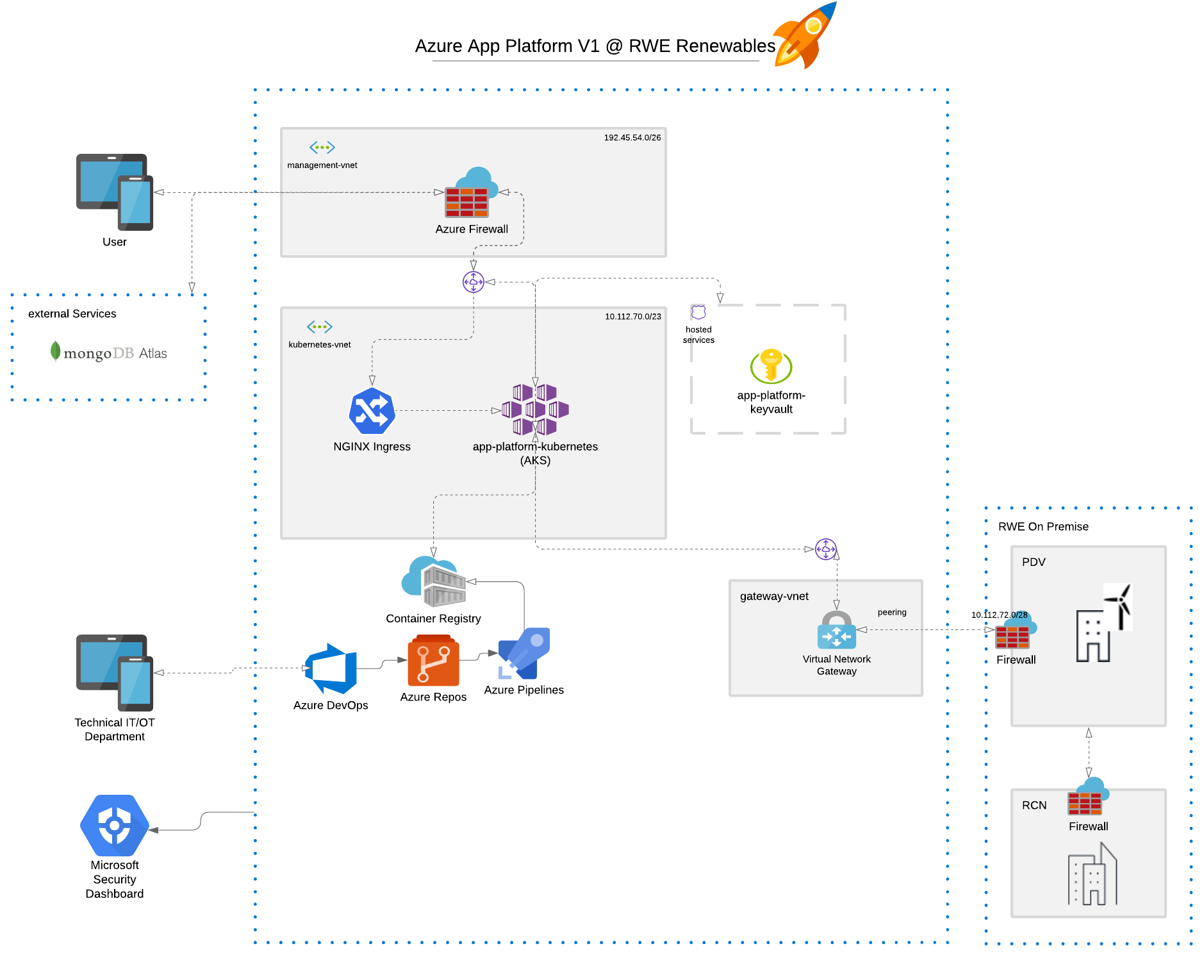

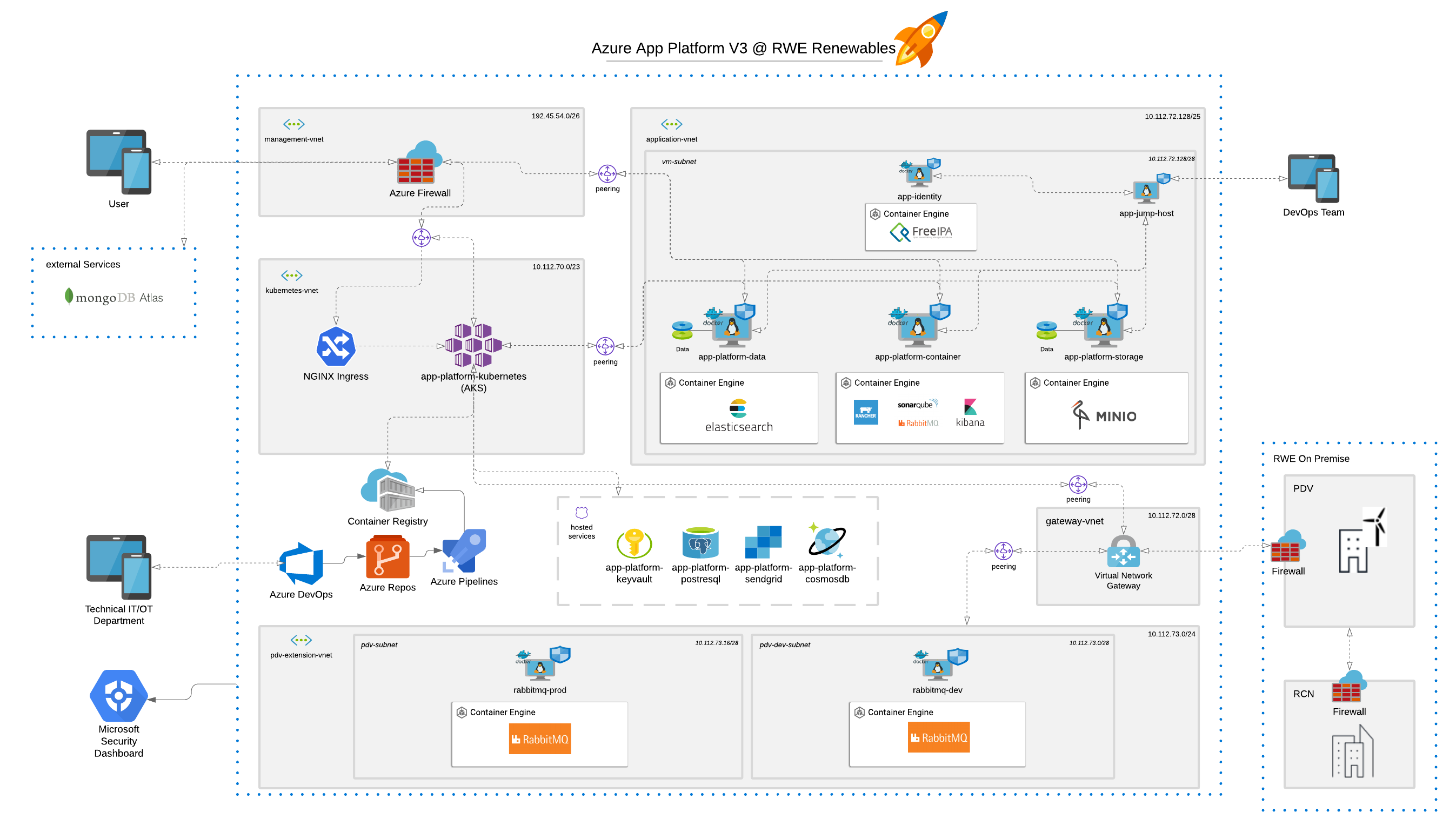
- it works
- it is flexible
- it is extensible
- it is scalable
- documentation
- boilerplate projects
- developer onboarding
- zero downtime deployments
- ExpressRoute to RCN
- PDV Extension Subnet -> AKS
